
Mineral sourcing · Field verification
A field verification guide for overseas mineral sourcing
Check the parties before the visit, the goods on site and the records afterwards.
A site visit should answer six questions: who is selling, where the goods are, which batch is offered, how quantity and sampling will be checked, whether it can be shipped, and what remains unconfirmed.
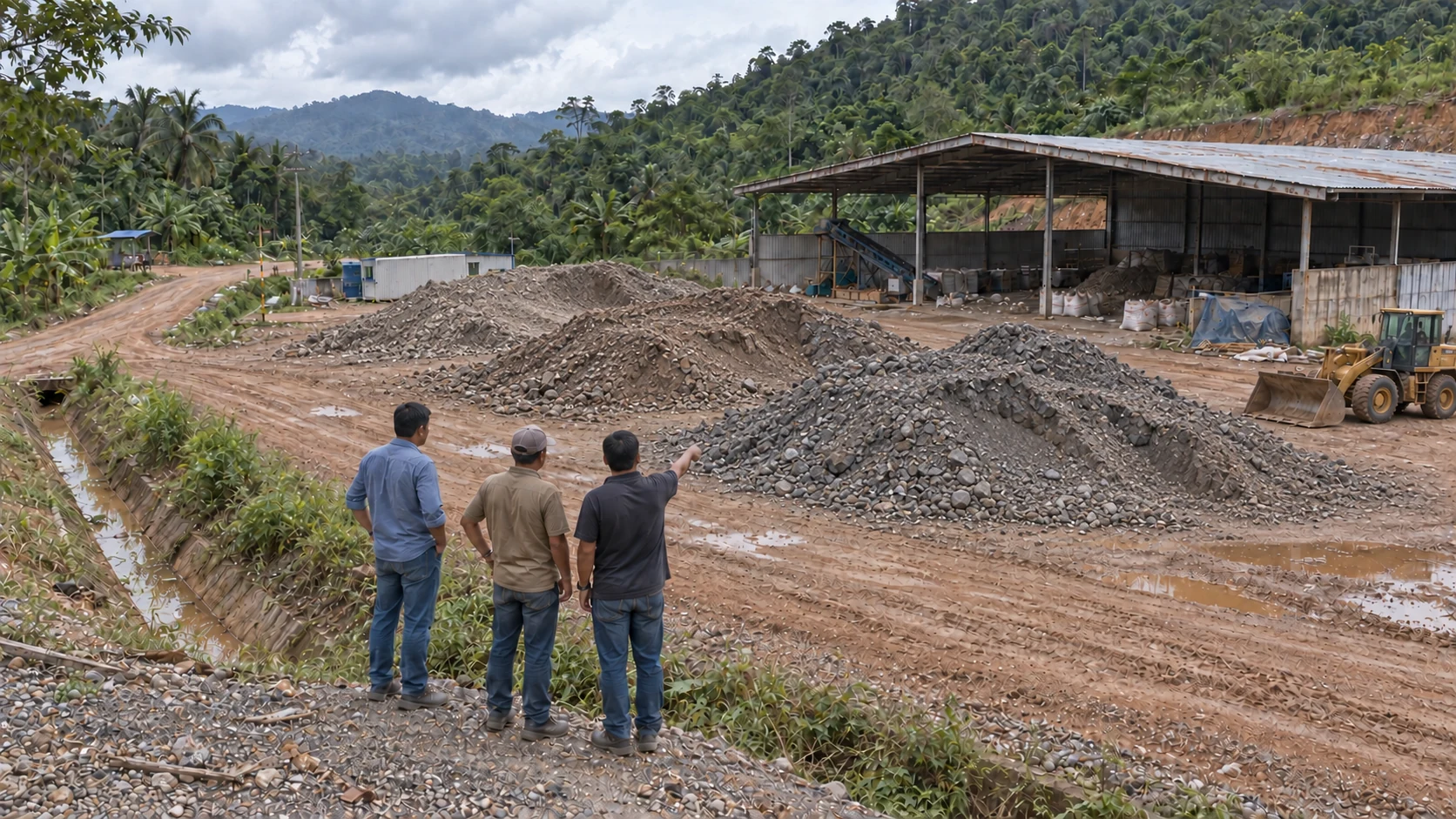
Focus on these six checks
- 01 Trading partyWho is the seller, and who can make commitments?
- 02 Goods locationWhere will the visit take place, and what is accessible?
- 03 Transaction batchDo the goods match the photographs and inventory list?
- 04 Quantity & samplingWhat supports the quantity, and which goods does the sample represent?
- 05 Loading conditionsHow will the goods move, and where will delivery occur?
- 06 Records & confirmationWhat is verified, and which documents or actions are still needed?
1. Before the visit: confirm the parties and location
Confirm the contact, site and accessible scope before travelling so the visit has a defined subject.
01 Trading party: who sells and who can confirm the transaction?
Check whether the contact represents the mine operator, processing plant, goods holder, authorized seller or an intermediary. Establish the relationship between the proposed contracting company and the people receiving you on site.
Record the proposed contracting entity, site contact and responsibilities. List the identity, authorization and origin documents that need verification. If the host cannot explain its relationship to the seller or authorization is missing, record it as outstanding. Hosting a visit does not establish authority to sell.
02 Location: where to go and which goods can be viewed
Establish whether the location is a mine, processing plant, stockyard or warehouse. Ask when and where earlier photographs were taken, and which areas and goods may be inspected.
Keep the precise location, access contact, list of goods to be viewed, and photographs or continuous video connected to that location. Confirm the site, scope and entry arrangements before booking travel. State any restrictions on photography or physical access beforehand.
- Party: proposed contracting company and the host’s role.
- Location: precise site, contact and entry arrangements.
- Goods: areas, batches or packaging covered by the visit.
- Task: questions to verify and tests requiring a separate commission.
2. On site: establish the batch before quantity and sampling
Define the proposed transaction goods before discussing quantity, sampling and analysis.
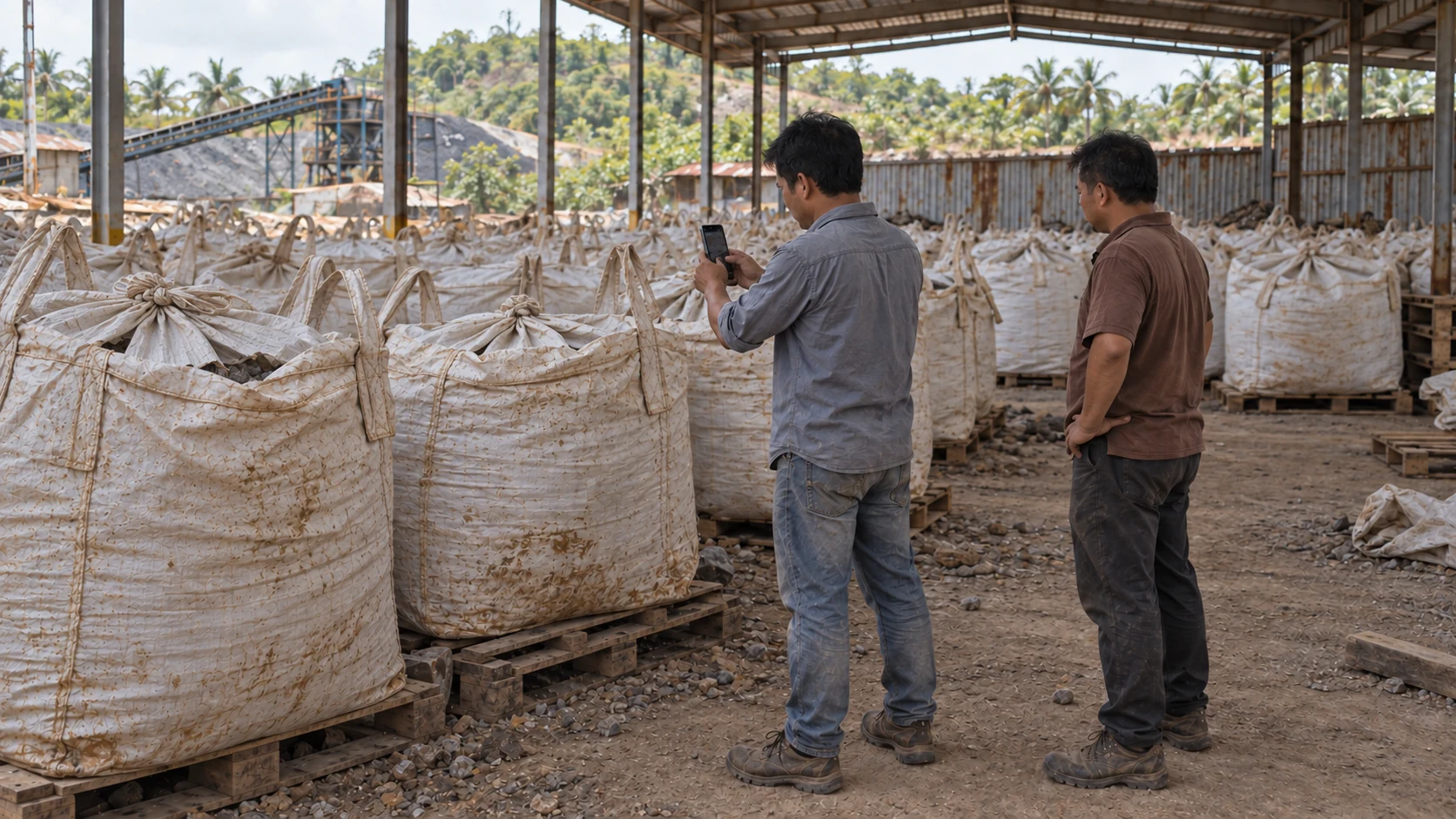
03 Transaction batch: compare photographs, lists and actual goods
Identify the relevant pile, row of packages or storage area. Record mixed storage, movement, additional goods and packaging abnormalities. Photograph the overall site, individual areas and details, matching each record to the goods list and identifiers.
04 Quantity and sampling: state the evidence separately
Distinguish the seller’s declared quantity, counted units, visual estimates and actual measured weight. Specify the subsequent quantity-verification method and the basis used for settlement.
Agree the sampling scope, method and handover with the testing organization so the sample can be linked to the proposed batch. SGS’s service description also relates sampling to material characteristics and commercial and logistical requirements [1].
Photographs cannot establish grade. A small casual grab sample cannot automatically represent an entire batch. If the goods change, confirm again which goods the original records and samples cover.
2. On site: verify loading and delivery conditions
Once the goods have been located, establish how they can leave the site, where they will be delivered and whose cooperation is required.
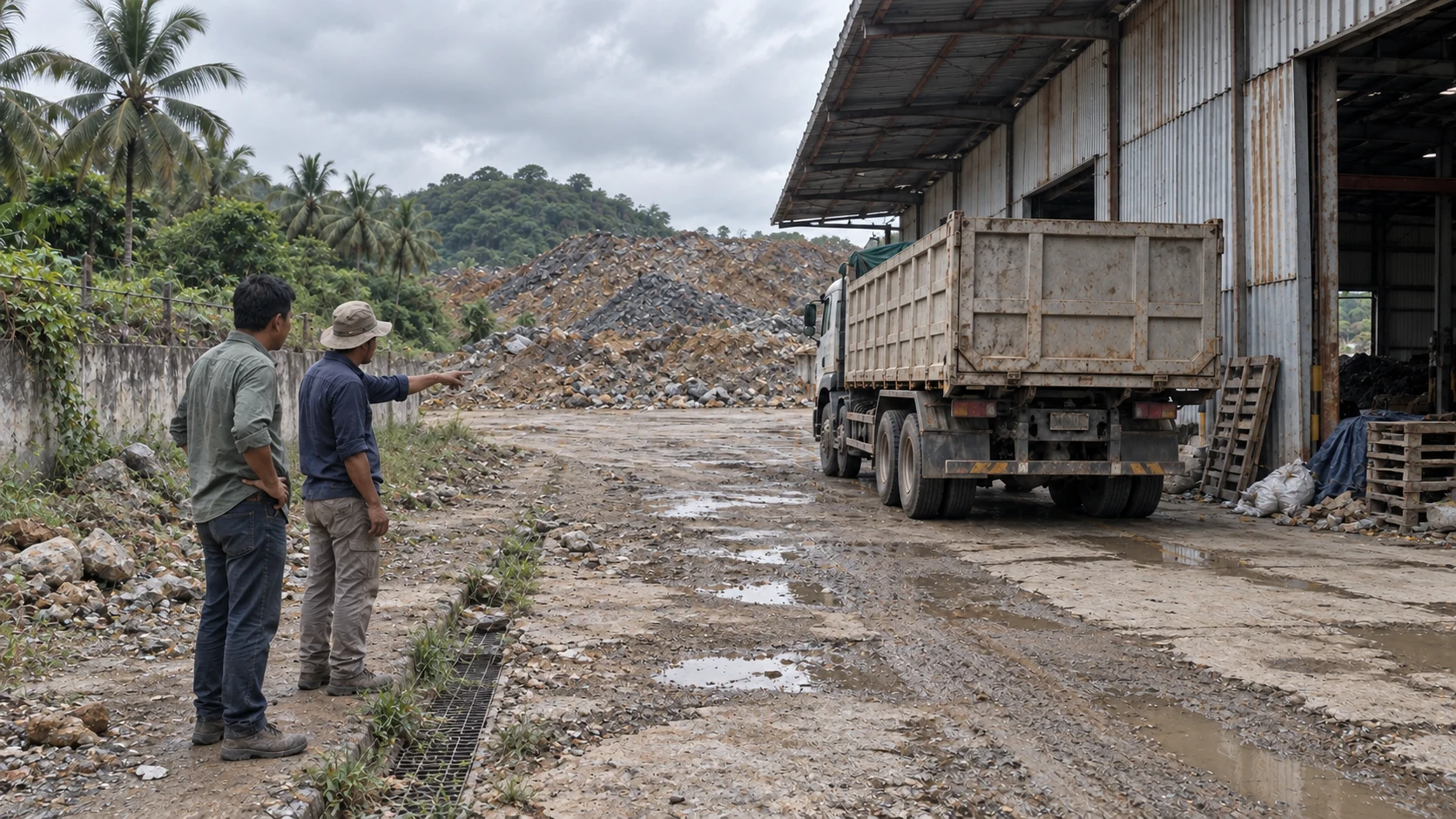
05 Loading: connect the stockyard to the delivery point
Check entry and exit roads, vehicle turning space, loading areas, equipment and weighing facilities. At open-air sites, also examine covers, drainage and weather exposure.
Record the visit date, operating conditions observed, available arrangements for vehicles, equipment and personnel, and items requiring advance booking.
If delivery involves transfer, reloading or a new warehouse entry, agree how the goods will remain identifiable and who bears the responsibilities and charges. An accessible road does not establish that trucks or equipment are booked for the agreed date. Quantity checks, analysis and loading inspection each require a separately confirmed scope [2].
3. After the visit: turn observations into confirmations and actions
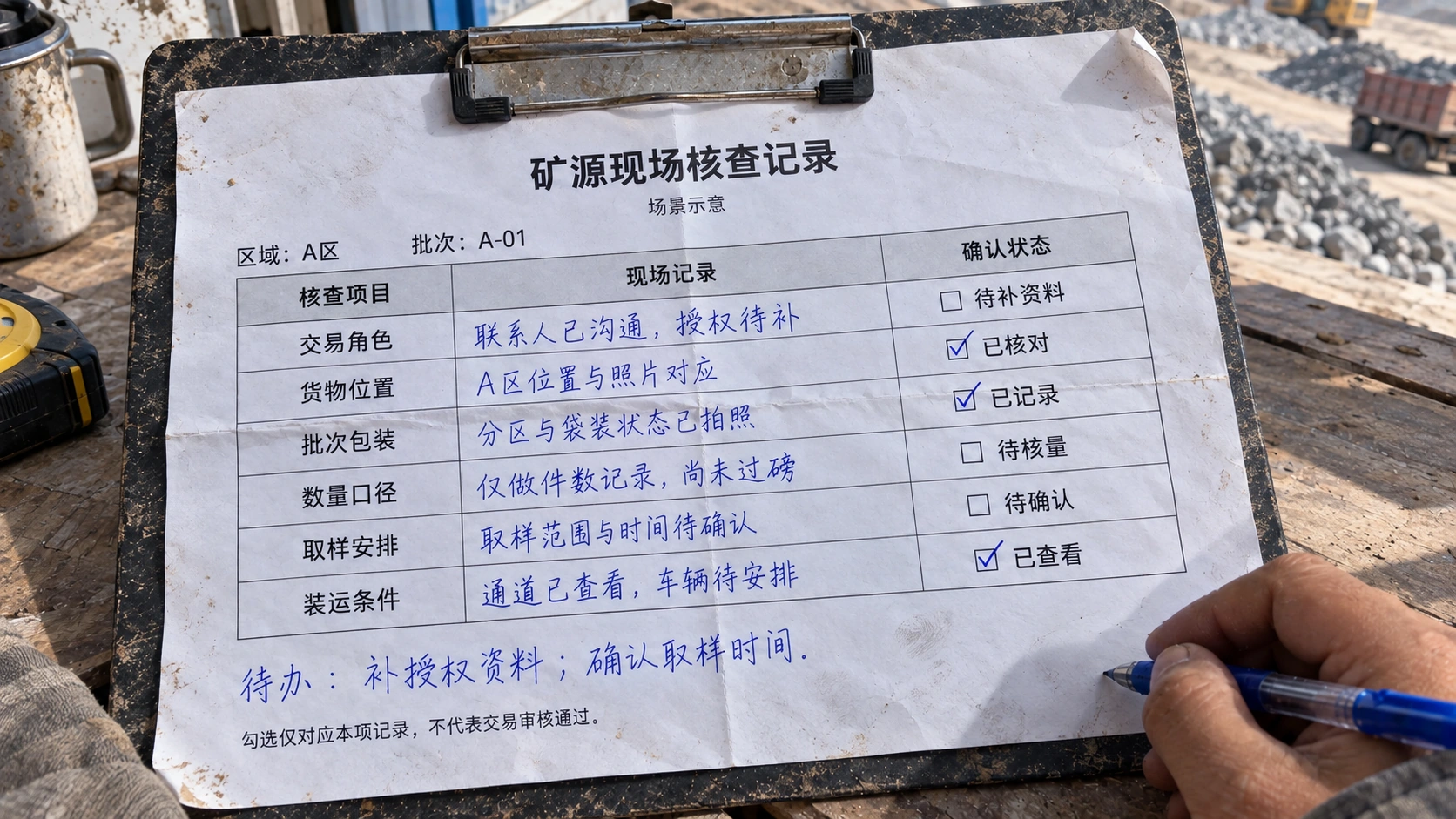
06 Records: every check mark needs evidence
Separate verified observations, statements from the other party and unresolved matters. For each open item, state what is missing, who must provide it and how it will be verified.
| Status | How to record it |
|---|---|
| Verified | State what was checked, when, how and the photograph or document reference. Example: Area A’s location matches the site photographs. |
| Other party’s statement | Identify the source and the unverified part. Example: stock quantity declared by the seller, not independently weighed. |
| Pending confirmation | List the missing document, responsible person and next check. Example: authorization documents outstanding; sampling date not yet confirmed. |
“Packaging photographed” confirms that a photographic record exists. It does not replace authority checks, quantity verification or a laboratory conclusion. The checklist is a working record, not a test certificate.
What records should you bring back?
| Check | Expected record |
|---|---|
| Trading party | Entity name, contact responsibilities and authorization documents still to verify |
| Goods location | Precise location, accessible scope and corresponding photographs |
| Transaction batch | Area or package list, batch identifiers and exceptions |
| Quantity and sampling | Quantity evidence, outstanding measurement work and sampling/testing arrangements |
| Loading conditions | Handling conditions, delivery point and coordination needed |
| Records and confirmation | Verified items, outstanding actions and their owners |
Decide the next action
Continue price and contract discussions when there is a shared basis for the proposed batch, quantity-verification method, testing arrangements and key delivery conditions. Resolve unclear identity or authority, unmatched batches, ambiguous quantity bases or inaccessible essential goods first.
To discuss field verification with RTV, provide the mineral or material, country and city, planned purchase quantity, existing photographs and documents, and the most important questions to verify. This helps define the scope of the visit and testing coordination. Timing and fees follow the arrangements agreed by both parties.
A site visit is one part of transaction verification. Combine it with checks on the parties, goods origin, testing and contract terms. Images and the checklist in this article illustrate business scenarios.