
TIN ORE & CONCENTRATE PROCUREMENT
Buying Tin Ore at the Myanmar–Thailand Border: From WhatsApp ‘OK’ to Actual Delivery
Stock available. Sampling possible. Delivery confirmed. Why can an apparently agreed deal turn into something different on site? Follow the transaction to identify gaps in authority, testing, fees and release conditions.
The phone shows ore photographs, a grade, a price and repeated assurances that everything is ‘OK’. The buyer books a trip, contacts an inspection company and plans transport, expecting a final check of the goods.
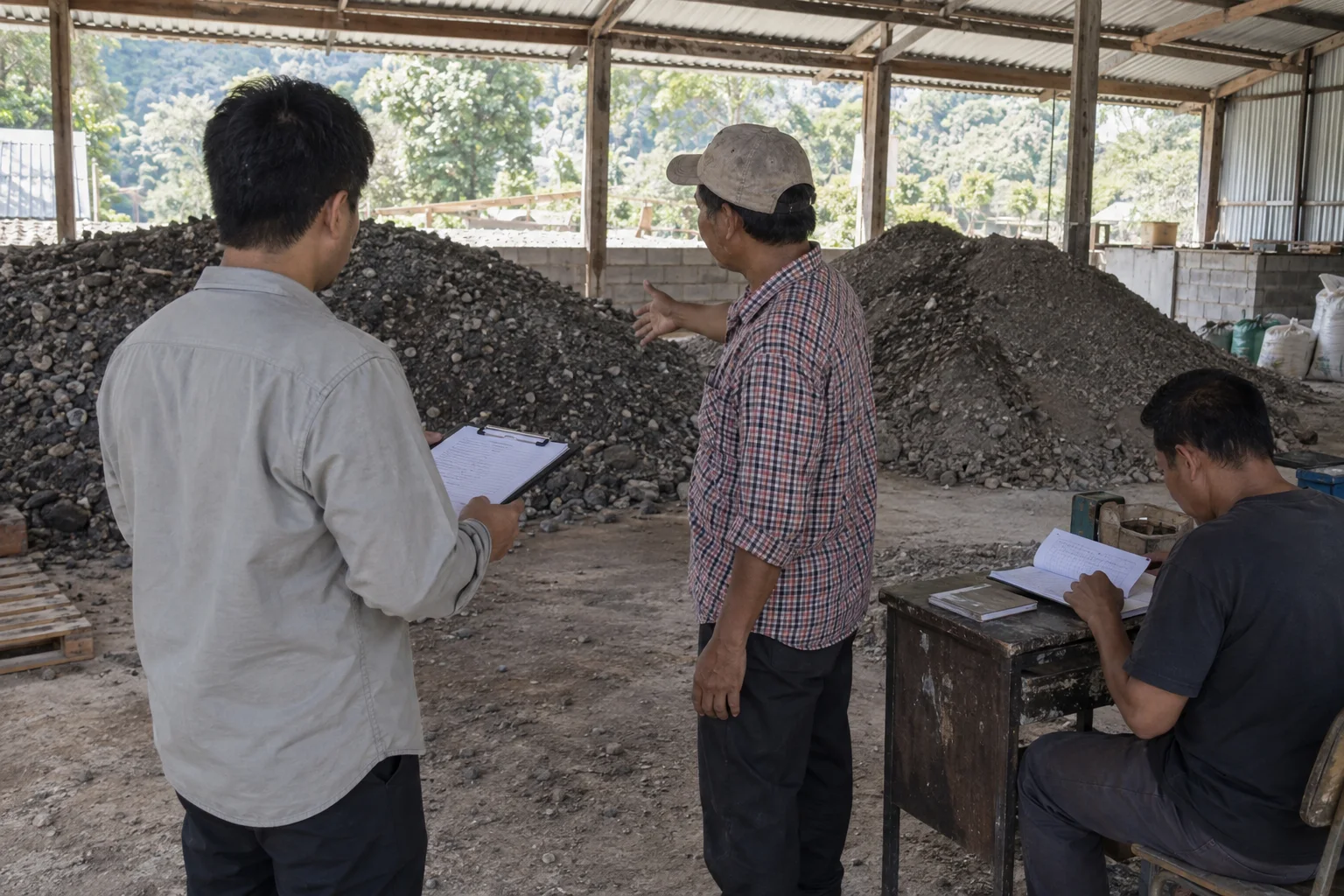
On arrival, the person showing the stock may not own it. Sampling access may be restricted. Additional charges appear, and paying the quoted price may still not secure release. Each resolved question exposes another condition.
Risk can build when essential terms remain incomplete while the buyer has already started spending.
The hypothetical situations in this article concern tin ore and concentrate procurement around the Myanmar–Thailand border. They do not describe a named business or imply that all border transactions involve misconduct. Advance payments, intermediaries and storage charges are not, by themselves, evidence of fraud. The generated illustrations depict fictional situations, not actual cases or completed RTV transactions.
01 · Everything is ‘OK’ on WhatsApp—until you arrive
Buyer ‘Is the stock at the warehouse? Can we visit and sample it?’
Contact ‘Yes, OK. Come first.’
Buyer assumes The stock is ready, the contact is authorised, and the agreed sampling method is permitted.
On arrival ‘The owner is away. We have prepared a sample. Sampling the whole lot requires a reservation payment first.’
The same answer can conceal different understandings. ‘Available’ may refer to somebody else’s stock. ‘Sampling allowed’ may mean accepting a prepared bag. ‘Deliverable’ may depend on the owner’s agreement, outstanding charges or incomplete paperwork.
Information also changes as it passes through intermediaries. An estimated supply quantity becomes confirmed inventory; one sample’s result becomes the lot’s average grade; storage in Thailand becomes Thai origin. Some omissions may be deliberate; others result from passing on information without checking it.
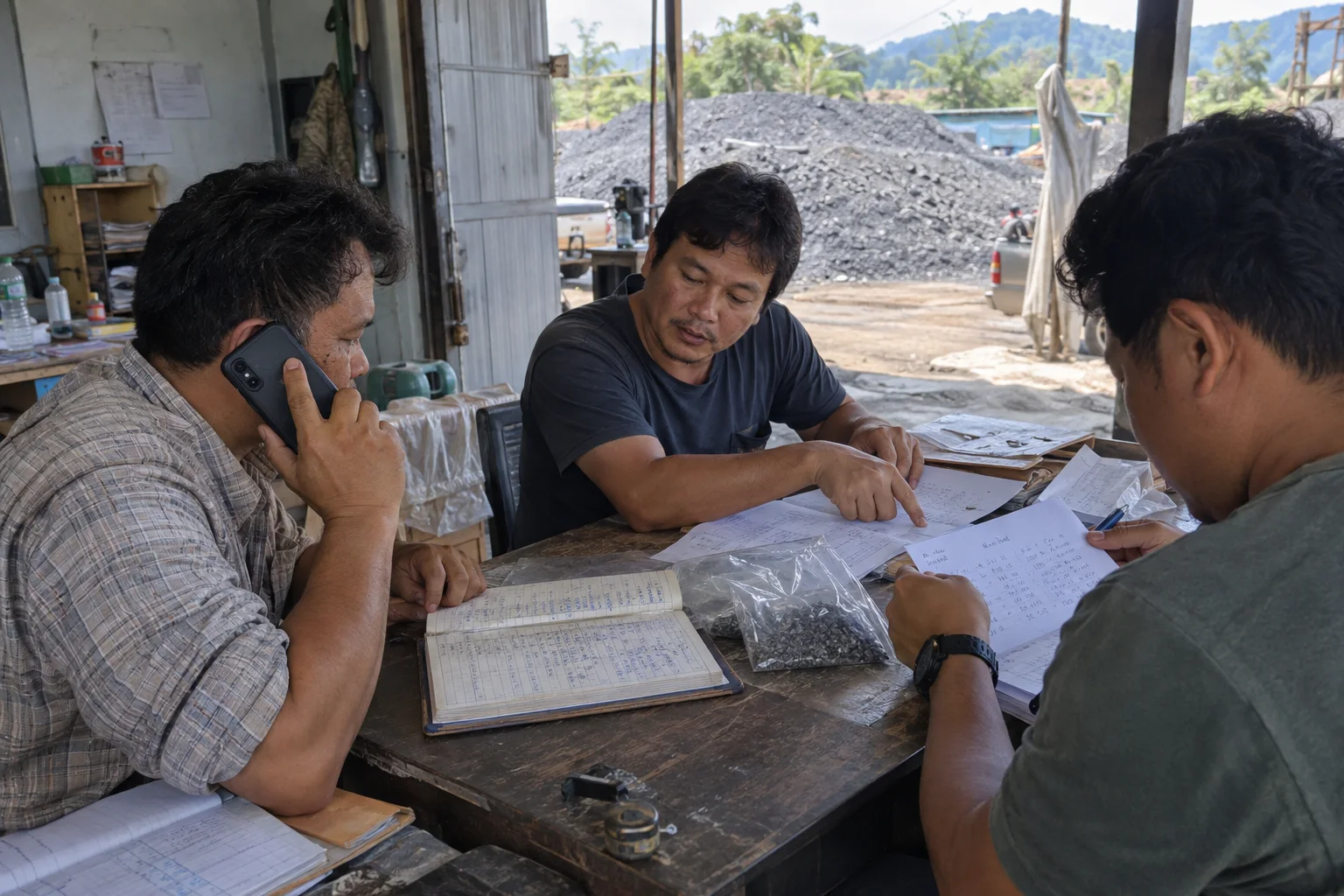
Before travelling, replace ‘OK’ with specific answers
Record the batch, current quantity, owner, sampling permissions, included costs, delivery point and outstanding conditions in one list. Mark each item ‘confirmed’, ‘pending’ or ‘cannot be met’, with the person, date and supporting evidence.
Verify inventory with the actual custodian, selling authority with the owner, and sampling scope with the appointed inspection company. An intermediary can coordinate these checks, but a personal assurance cannot replace them.
A condition you have not discussed may still exist. An unanswered item remains unconfirmed.
02 · The ore exists—but the person showing it may not be entitled to sell it
The contact knows the staff, opens the gate and arranges photographs or movement of the ore. When payment is discussed, the explanation changes: ‘Sign with me first. I will deal with the actual owner.’
Access to goods establishes access, not ownership or authority to sell. The introducer, site manager, custodian and owner may be separate parties. Even real stock may be offered by someone without sufficient authority to sell it, receive payment or instruct release.
After payment, the owner may reject the deal, the warehouse may lack a valid release instruction, or the stock may have been allocated elsewhere. Photographs and payment records do not make the goods collectible.
During the visit, establish who can authorise release
- Identify the owner, contracting party and payee, and verify any agency or collection authority.
- Match the proposed purchase to batch marks, location, packaging or bag numbers and dated inventory records.
- Ask the actual custodian who can instruct release, how quantity is recorded, and which charges or conditions remain outstanding.
- Reconcile conflicting accounts. A verbal warehouse confirmation or a single stock record is not a complete ownership check.
A useful visit verifies both the goods and the relationships governing sale, custody and release.
03 · A good sample and a genuine report may still relate to the wrong lot
The seller produces a prepared bag: ‘This is from the pile. It has already been tested.’ But when the buyer asks for an agreed sampling programme, other bags or parts of the pile become inaccessible—or a deposit is suddenly required.
Two separate questions matter: is the report genuine, and does the tested sample represent the lot being purchased? A genuine report can refer to an earlier lot, a different pile or only a small sample submitted to a laboratory.
Distinguish raw tin ore from tin concentrate and define material form, grade basis and relevant impurities. An attractive specimen cannot establish the quality of an entire consignment.
Identify the lot and sampling scope before using an assay for settlement
Agree a suitable sampling plan with a competent inspection provider. Define coverage, sample identification, preparation, sealing and retained samples, and preserve the link between samples and the identified goods. If the lot is mixed, added to or replaced afterwards, reassess whether the earlier result remains applicable.
SGS lists sampling and sample preparation among its mineral and metal quality and quantity inspection services. Confirm what is actually commissioned: on-site sampling, quantity inspection or laboratory analysis of a submitted sample. A provider’s name alone does not establish the scope. SGS service reference.
Also agree wet versus dry weight, moisture, tare, grade basis, impurity deductions and a procedure for disputed results. The same report can otherwise produce different settlement calculations.
04 · A deposit or ‘container locking fee’: what does the payment actually secure?
‘Another buyer is interested. Pay a little now to reserve it.’ A container number, seal photograph and charge slip follow. The contact says a ‘locking fee’ will secure the cargo, but cannot clearly explain who holds it or how other collections will be prevented.
An advance payment may form part of an agreed transaction. Without verified ownership, batch identity, payee details and refund conditions, however, the buyer may be paying for an unverified promise.
‘Locking’ is not a sufficiently precise service description. It might mean reserving a container, sealing it, reserving stock or restricting release. A container number, seal image or receipt alone does not establish title or prove that the custodian has accepted a restriction on release to others.
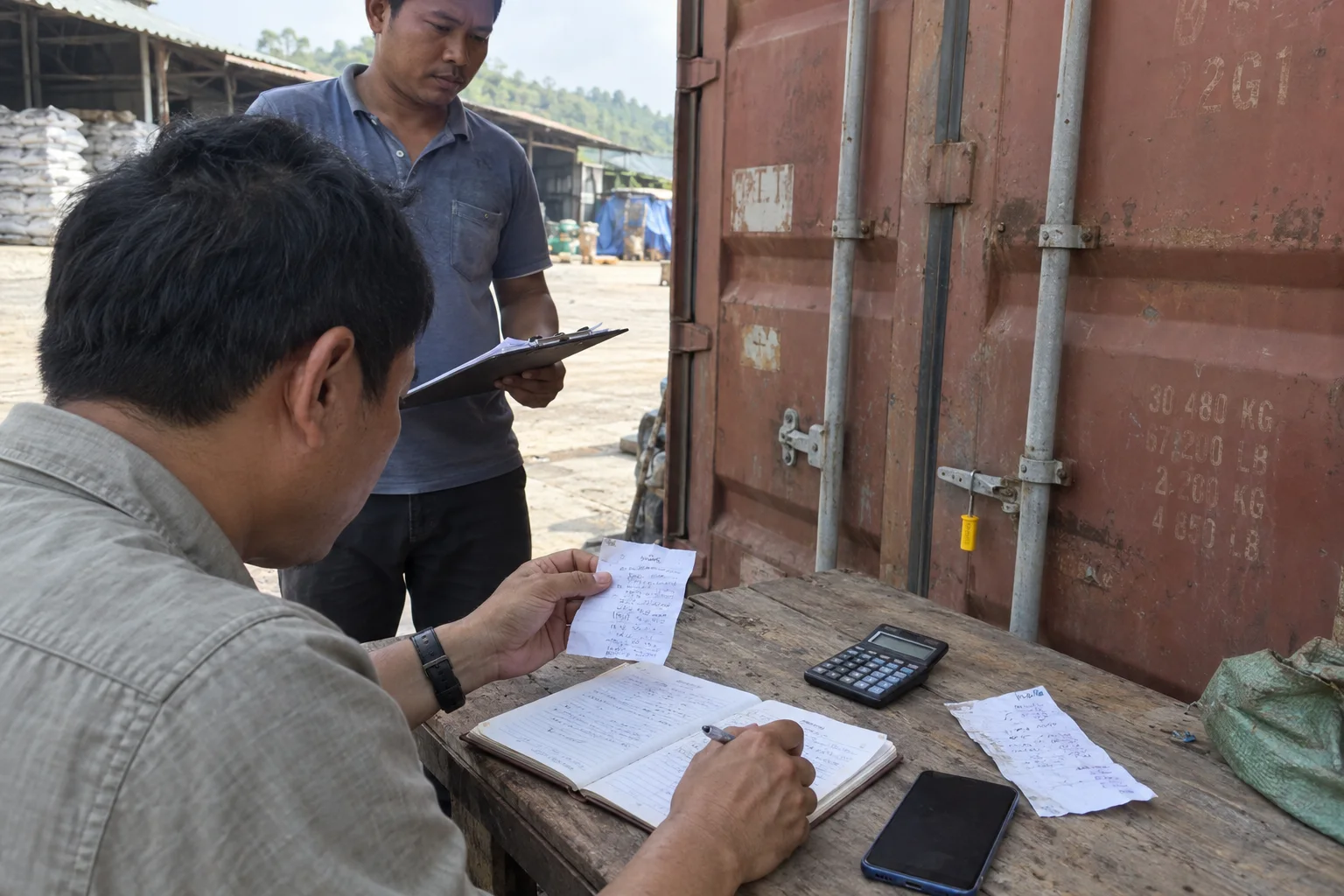
Answer four questions before paying
- Who receives the money? How is the payee connected to the contract, owner or service provider?
- What is purchased? Which service, lot and validity period does the charge cover?
- Who performs it? Has the actual warehouse or service provider confirmed the arrangement?
- What if it is not performed? Are performance evidence, cancellation and refund responsibilities defined?
Pause over unexplained personal or third-party accounts, last-minute account changes, or urgent demands coupled with refusal of independent verification. Check account changes through a separate, previously verified channel—not just another message in the same conversation. IC3 likewise recommends secondary-channel verification for payment-account changes. IC3 verification guidance.
05 · Collection is approaching—and the missing terms appear
The price is agreed on WhatsApp and transport is arranged. Only then do you hear that commission was excluded, warehouse charges remain unpaid, loading costs extra, or ‘paperwork is no problem’ only meant someone thought it might be possible.
An extra charge can be legitimate. A succession of undisclosed charges can nevertheless change the economics and timing of the deal. The buyer cannot tell whether the next payment will actually make release possible.
For border cargo, distinguish origin, present location, customs status and proposed route. Being near a border does not mean cross-border formalities are complete. Being stored in Thailand does not establish Thai origin or immediate transport availability.
List all outstanding conditions before dispatching transport or paying
Allocate the cargo price, commission, sampling, testing, handling, storage, transport and paperwork charges, with calculation bases and payment stages. Verify the recipient, service and supporting records for each new charge.
For the actual material, origin, destination and transaction date, confirm route and documentary requirements with the relevant authorities and qualified service providers. This article makes no claim about current border-crossing availability, a particular lot’s import/export eligibility or processing times.
The party authorised to release the cargo should explain what ‘pay and collect’ requires.
06 · The more you have spent, the harder it can become to stop
Flights, accommodation, translation and testing have already cost money. The contact says, ‘One more payment and we can load.’ Despite unanswered questions, the buyer thinks: ‘If we leave now, everything spent so far is wasted.’
Past expenditure is now influencing the next decision. Continuing to pay does not automatically recover earlier costs; it may simply increase the loss.
Be alert when each charge seems small and each request is described as the final step, yet ownership, test scope, total costs and release conditions remain unclear.
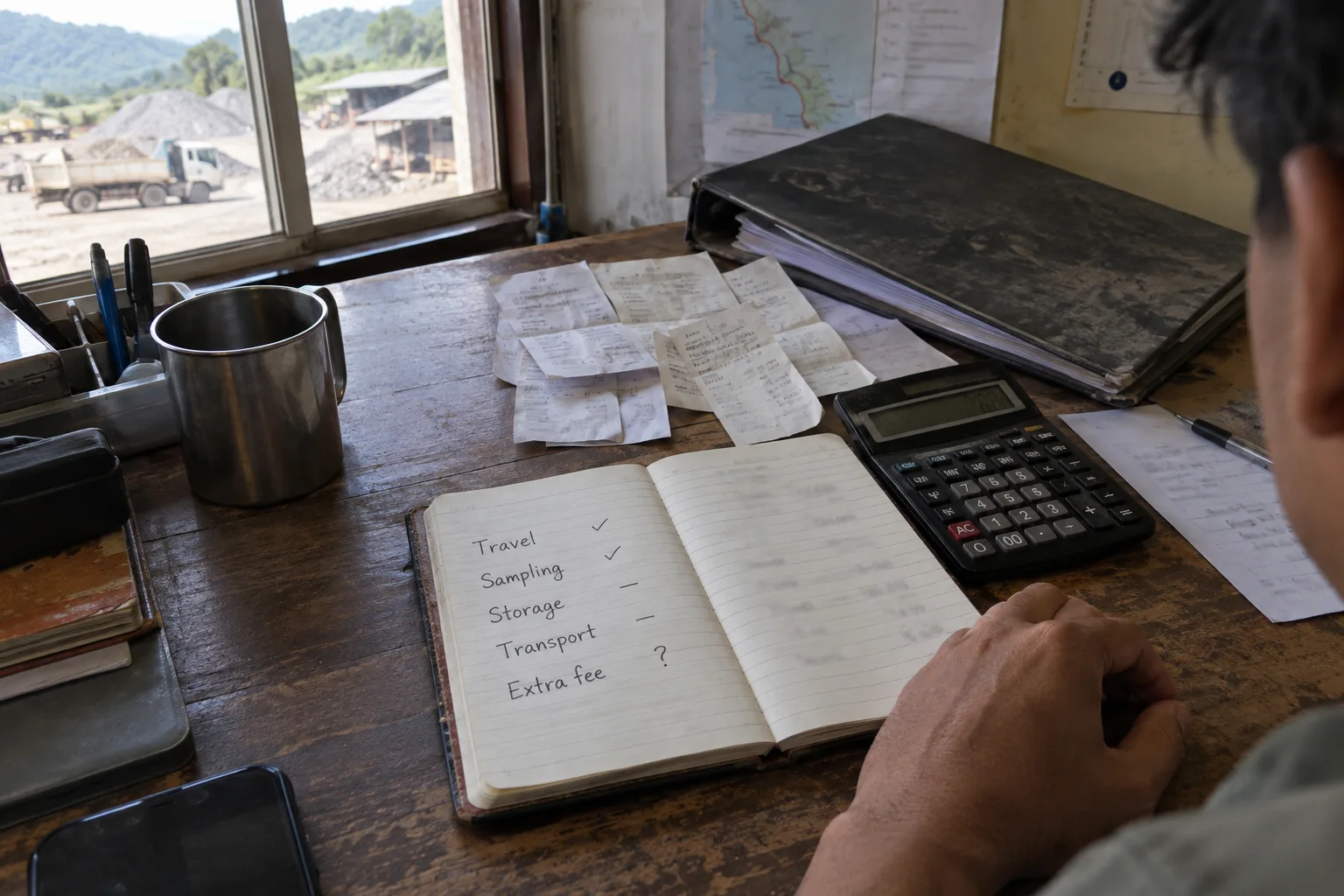
Require a separate justification for each new expense
- Set a verification budget. Separate travel, translation and testing from the cargo payment, with an expenditure limit.
- Proceed in stages. Each stage should deliver evidence: identified parties, a verified lot, completed sampling or defined release conditions.
- Pause on material contradictions. Stop new payments and reassess if ownership cannot be explained, independent checks are refused, accounts keep changing or release conditions keep growing.
- Keep original records. Retain quotation versions, chats, batch photos, inspection instructions, fee evidence and payment records, noting changes in terms.
If you had spent nothing so far, would the evidence available today justify this next payment?
Eight checks before travelling or paying
Not every point must be resolved in the first conversation. But unresolved points must be visible and should limit further commitments.
Procurement checklist
- Parties: who owns, sells, contracts and receives payment?
- Lot: where is it, how much is present, and how does it match photographs and records?
- Information: what comes from the owner or custodian, and what is only relayed?
- Sampling: who samples which lot, and how do report, sample and goods correspond?
- Settlement: are material form, grade, moisture, weight, impurities and disputes defined?
- Advance fees: what service does each payment cover, who performs it, and what happens on non-performance?
- Delivery: who releases the cargo, what remains outstanding, and who handles documents, costs and transport?
- Stop conditions: when do you pause, who approves added spending, and are cumulative costs recorded?
A visit does not establish ownership; a report does not establish an entire lot’s grade; an agreed unit price does not establish final settlement. Conversations, goods, inspection records and delivery documents must refer to the same lot and terms.
As verification progresses, the transaction should become clearer. If spending rises while essential facts remain unresolved, pause further commitments.
Have a tin ore or concentrate lot to discuss?
Share the current cargo location, material form, estimated quantity, available assay information, site photographs and proposed delivery arrangement with RTV. Mark what has been verified and what is still pending so the next checks can be discussed.
Discuss batch details with RTV →External links explain services or general verification practices; they do not imply endorsement of this article, RTV or a specific lot. Illustrations are fictional and contain no actual customer identities, accounts or assay-report templates.